
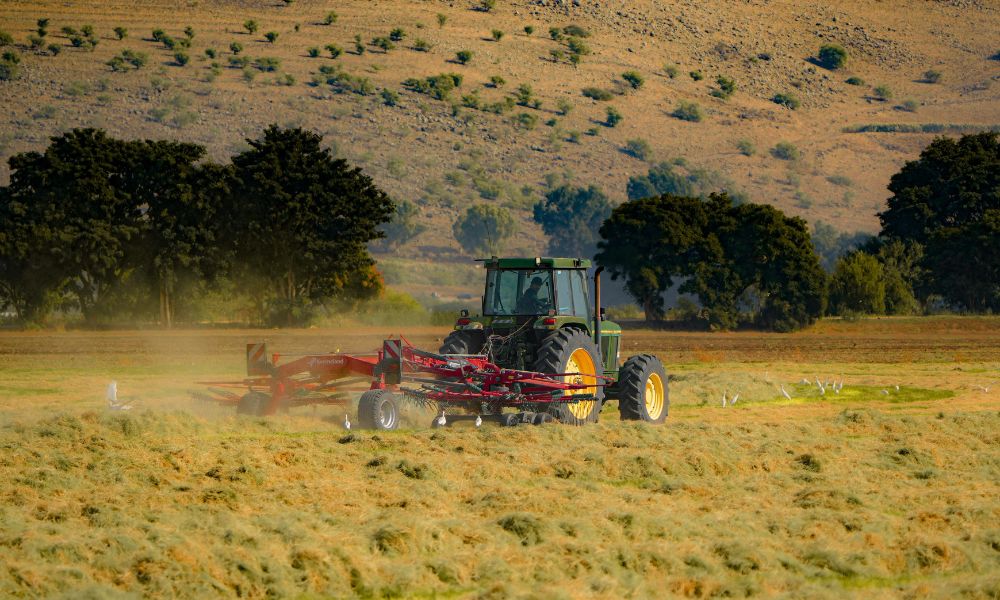
Fuel is one of the most significant ongoing costs on any farm, and for most agricultural operations it is also one of the most essential. Without a reliable supply of gas oil, diesel or kerosene, machinery stops, harvests stall and the whole rhythm of the farm falls apart.
Which is why on-farm fuel storage makes such good sense for so many agricultural businesses. Having your own tank means you are not dependent on scheduled deliveries at critical moments, you can take advantage of bulk pricing, and you always have fuel available when you need it.
But storing fuel on a farm also comes with real responsibilities. Done properly, on-farm fuel storage is safe, efficient and entirely compliant with UK regulations. Done carelessly, it carries significant risks: to the environment, to people on the farm, and to the farmer’s legal position.
This guide sets out everything you need to know about storing agricultural fuel safely on your farm, from choosing the right tank to meeting your legal obligations and keeping your fuel in the best possible condition.
Know Your Regulatory Obligations
Before anything else, it is important to understand that agricultural fuel storage in the UK is governed by specific regulations, and compliance is not optional.
The primary framework for farms in England is the Control of Pollution (Oil Storage) Regulations 2001, with equivalent regulations applying in Wales and Scotland. These set out minimum standards for how oil and fuel must be stored on agricultural and commercial premises, including requirements for secondary containment, tank construction, and distance from watercourses and drains.
Key points to be aware of include:
- Any tank storing more than 200 litres of oil or fuel at an agricultural premises must comply with the regulations
- Tanks must be constructed from suitable materials and must be structurally sound and impermeable
- A secondary containment system (bund) is required for most tanks, capable of holding at least 110% of the tank’s capacity
- Tanks must be positioned away from drains, watercourses, and areas where spillage could reach water
- Fill and draw-off points must be within the bunded area or have other means of containing spillage
- There must be a visible sight gauge so you can monitor fuel levels without needing to open the tank
It is also worth noting that the Health and Safety Executive (HSE) has guidance on the safe storage of flammable liquids, including diesel and gas oil, which may be relevant depending on the volumes you are storing. If you are at all unsure about whether your existing or planned storage arrangement is compliant, it is worth speaking to your fuel supplier or an environmental consultant.
Choosing the Right Tank for Agricultural Use
The tank you choose will depend on the volume of fuel you need to store, the types of fuel involved, the location on your farm, and your budget. There are several main options commonly used in agricultural settings.
Bunded plastic tanks are the most common choice for farms storing up to around 10,000 litres. The inner tank holds the fuel and the outer skin acts as the secondary containment, meaning the bund is built in. They are generally lower cost than steel alternatives, require little maintenance, and are straightforward to install. Most reputable suppliers offer them with fittings and gauges included.
Steel tanks are more commonly used for larger volumes and in permanent, fixed installations. They tend to be more robust and longer-lasting, but require more careful attention to corrosion, particularly in exposed or coastal locations. They can be hot-dip galvanised or coated internally to extend their service life.
Transportable bowsers are used where fuel needs to be taken out to machinery in the field rather than machines coming to a central refuelling point. These need to comply with transport regulations as well as storage regulations and should be fitted with appropriate shut-off valves, hoses and locks.
Whatever type of tank you choose, make sure it is appropriate for the specific fuel you intend to store. Kerosene, gas oil and diesel all have slightly different properties, and a tank specified for one fuel type may not be suitable for another.
Siting Your Tank Correctly
Where you position your fuel tank on the farm is just as important as the tank itself. Poor siting is one of the most common causes of both regulatory non-compliance and environmental incidents.
The following principles should guide your decision:
- Keep the tank away from watercourses, ditches, ponds, and drains. The regulations set minimum distances, but common sense dictates that further is safer
- Avoid low-lying areas where surface water collects, as a spillage in these areas is far more likely to spread and reach a watercourse
- Position the tank on a stable, hard standing surface that is impermeable. Concrete is ideal. The surface should drain into the bunded area, not away from it
- Ensure the tank is accessible for delivery tankers. A tank that requires a vehicle to drive across soft ground or through awkward gateways will cause problems at every delivery
- Provide adequate access for inspection and maintenance, including being able to see the sight gauge clearly and reach any valves or connections without difficulty
- Consider security. Fuel theft is a genuine and growing problem on farms. Positioning your tank where it is visible from the farmyard, fitting a lockable fill point and considering CCTV coverage are all worthwhile steps
Secondary Containment and Bunding
Secondary containment, most commonly in the form of a bund, is a legal requirement for most on-farm fuel storage. Its purpose is straightforward: if the primary tank fails or a spillage occurs, the bund contains the fuel and prevents it from reaching the ground or a watercourse.
For a bund to be effective and compliant, it must:
- Be capable of holding at least 110% of the maximum capacity of the tank it contains. This allows for the full contents of the tank plus some additional capacity for rainwater
- Be constructed from impermeable materials that are resistant to the fuel being stored
- Have no drain or outlet that would allow fuel to escape. Any rainwater that accumulates in the bund must be inspected before it is pumped out, to ensure it is not contaminated
- Be maintained in good condition, with no cracks, holes or damage to the walls or floor
If rainwater does collect in your bund, do not simply pump it out without checking it first. If you can see a sheen on the surface, or if you can smell fuel, the water is contaminated and must be disposed of correctly as waste, not discharged to a drain or watercourse.
Preventing and Managing Spillages
Even with a properly bunded tank, spillages can and do occur, most commonly during the delivery and dispensing of fuel rather than from the tank itself. A few straightforward precautions will significantly reduce the risk.
- Always be present during fuel deliveries. Do not leave a driver to fill unattended
- Check that all valves are in the correct position before delivery begins, and confirm the tank has sufficient capacity to receive the delivery
- Fit an overfill alarm or automatic shut-off valve if your tank does not already have one
- Keep the area around fill and draw-off points clean and inspect it regularly for signs of leakage
- Use a drip tray beneath any dispensing equipment, including pumps and hose connections
- Keep a spill kit accessible near the tank at all times. A basic agricultural spill kit should include absorbent granules or pads, a shovel, and appropriately rated waste bags
- If a significant spill occurs that reaches a watercourse or drain, you are legally required to report it to the Environment Agency (in England) or Natural Resources Wales
Maintaining Fuel Quality in Storage
Fuel that sits in a tank for extended periods can degrade, and degraded fuel causes real problems. Gas oil and kerosene are both susceptible to contamination from water ingress, microbial growth and oxidation, all of which can damage injectors, filters and boilers if the fuel is used in that condition.
To keep stored fuel in good condition:
- Keep the tank as full as possible when not in active use. A near-empty tank has a large air space above the fuel, which leads to condensation forming on the interior walls and water contaminating the fuel below
- Inspect the tank regularly for signs of water in the fuel, which typically shows as cloudiness or a layer of water at the base of the tank when you draw off
- Have your tank cleaned periodically to remove sludge and sediment that accumulates at the bottom over time
- Consider using a fuel additive to protect stored fuel from degradation. Products such as those in the Exocet range, which Quad Fuels supplies as an authorised FAST distributor, include storage stabilisers that protect fuel quality over long periods, as well as biocides that prevent microbial growth
- Check filters and strainers regularly and replace them when they become blocked or discoloured
If you notice a change in the performance of your machinery or boilers, degraded fuel should be one of the first things you consider. A clean tank and quality fuel makes a significant difference to the reliability and longevity of your equipment.
Security and Fuel Theft
Fuel theft from farms is a persistent and costly problem across rural Wales and the wider UK. Diesel and gas oil are attractive targets, and agricultural premises can be vulnerable given their size and the difficulty of monitoring remote areas overnight.
Practical steps to improve fuel security on your farm include:
- Fit a quality padlock or lockable cap to all fill and draw-off points
- Install a lockable pump or remove the pump handle when not in use
- Consider a tank alarm that alerts you if the fuel level drops unexpectedly
- Position tanks where they are visible from the farmhouse or main working areas where possible
- Use CCTV coverage of the fuel storage area, particularly if you have experienced theft before
- Keep a record of fuel levels and usage so that any unexplained reduction can be identified quickly
Regular Inspection and Maintenance
A fuel storage installation is not something you set up and forget. Regular inspection is both a legal requirement and a practical necessity.
As a minimum, you should:
- Inspect the tank and bund visually on a regular basis, looking for signs of damage, corrosion, leakage or deterioration
- Check all pipework, valves, gauges and connections for any signs of wear or leakage
- Clear any vegetation that grows up around the tank or bund, as roots can damage bund walls and vegetation makes inspection more difficult
- Keep a record of your inspections, noting the date, what you checked and any issues found or actions taken
- Have the tank professionally inspected every few years, or sooner if you have any concerns about its condition
If your tank is approaching the end of its serviceable life, it is far better to replace it proactively than to wait for a failure. Quad Fuels can advise on tank replacement and can arrange for the removal of old tanks and the installation of new compliant ones.
Talk to Quad Fuels
With over 100 years of oil industry experience and depots at Colwyn Bay and Wrexham, Quad Fuels has been supplying agricultural customers across North Wales, Shropshire, Wrexham and the surrounding areas for many years. We supply gas oil, diesel, heating oil, lubricants and a full range of fuel additives through our authorised partnership with FAST, including the Exocet range.
Whether you are setting up a new on-farm fuel storage arrangement, looking to replace an ageing tank, or simply want advice on the best fuel and additive combination for your machinery, we are always glad to help.
Get in touch with our Colwyn Bay team on 01492 353103 or our Wrexham team on 01978 423150, and we will be happy to talk through your requirements.